
Building Resilient Communities, One Household at a Time
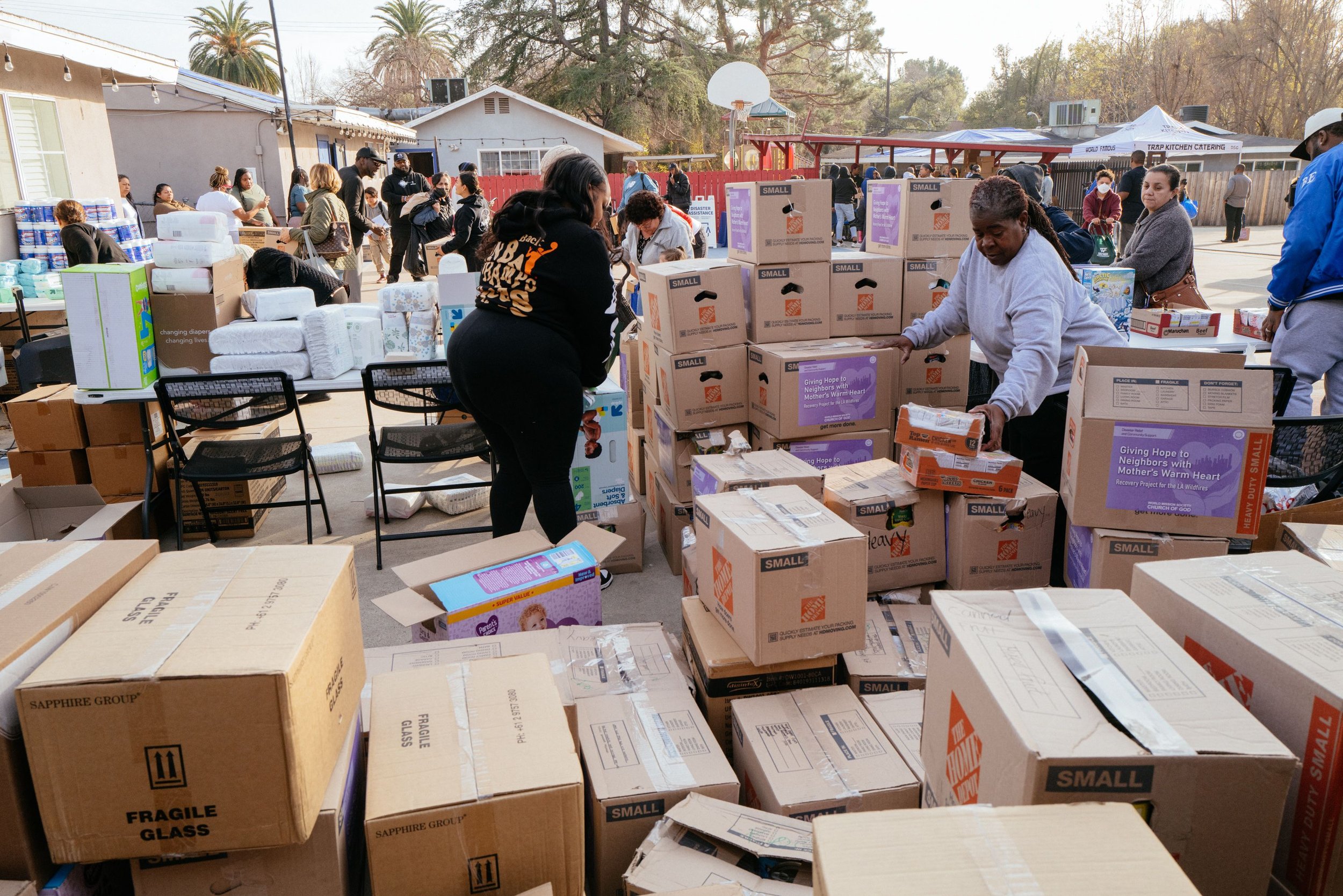
The Eaton Fire changed how our community thinks about safety, readiness, and recovery. Project Passion's Disaster Preparedness Program exists to make sure that the next emergency, whether it's a wildfire, earthquake, or extreme weather event, finds our neighbors ready instead of caught off guard.
We believe disaster preparedness is not just about supplies and checklists. It is about relationships, communication, and community infrastructure that hold up when things get hard. Our program is built around that belief, and around the direct experience of families who lived through the Eaton Fire and are still working through recovery today.
Project Passion's Disaster Preparedness Program was created to close those gaps before the next emergency arrives.
What We Do
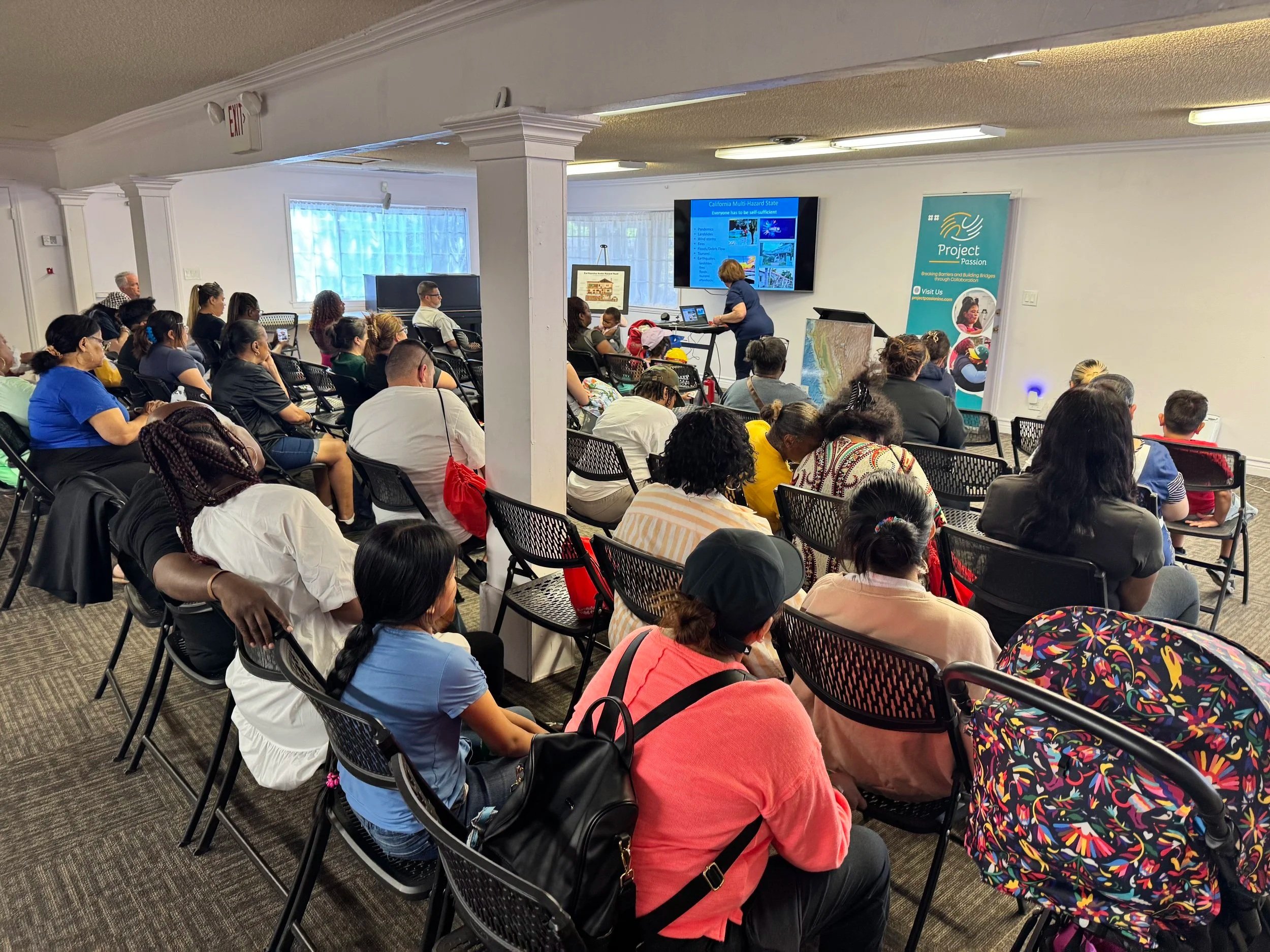
Community Education and Training
Workshops and hands-on trainings that teach households how to build an emergency plan, assemble a go-bag, understand evacuation routes, and know what to do in the first hours of a disaster.
Household Preparedness Support
Direct, one-on-one support to help families create household-specific emergency plans, especially seniors, renters, people with disabilities, and others who face extra barriers during an emergency.
Neighborhood Communication Networks
Block-by-block and building-by-building networks so neighbors can check on each other, share real-time information, and coordinate during an emergency, closing the gap that formal alert systems often leave open.
Resource Navigation
Help connecting residents to emergency supplies, financial assistance, insurance guidance, and recovery resources, both before a disaster and in its aftermath.
Community Needs Assessment
Ongoing listening and data collection, including direct outreach and surveys, to understand what residents actually need and to make sure the program keeps evolving with the community it serves.

Centering Our Most Vulnerable Neighbors
Disasters do not affect everyone equally. The people who face the greatest risk, and who are too often left out of emergency planning altogether, are at the center of this program:
● Seniors and older adults living alone, who may face mobility challenges or lack a nearby support network during an evacuation.
● People with disabilities and chronic health conditions, whose emergency plans require accommodations that generic preparedness guidance often overlooks.
● Low-income renters, who may lack insurance, savings, or a safety net to fall back on after a disaster, and who are frequently left out of homeowner-focused recovery resources.
● Non-English speaking households, who need emergency information and alerts in their own language to act quickly and safely.
● Families with young children, whose evacuation and sheltering needs require extra planning and supplies.
● Medically fragile residents, including those dependent on power for medical equipment or refrigerated medication.
● Undocumented residents and mixed-status families, who may be hesitant to seek formal emergency assistance and need trusted, community-based support instead.
We reach these households through direct outreach, in-language materials, home visits, and partnerships with trusted local messengers, not by waiting for people to find us.